
Categories
IE Multi FamilyPublished August 31, 2026
Inland Empire Multifamily Market Update

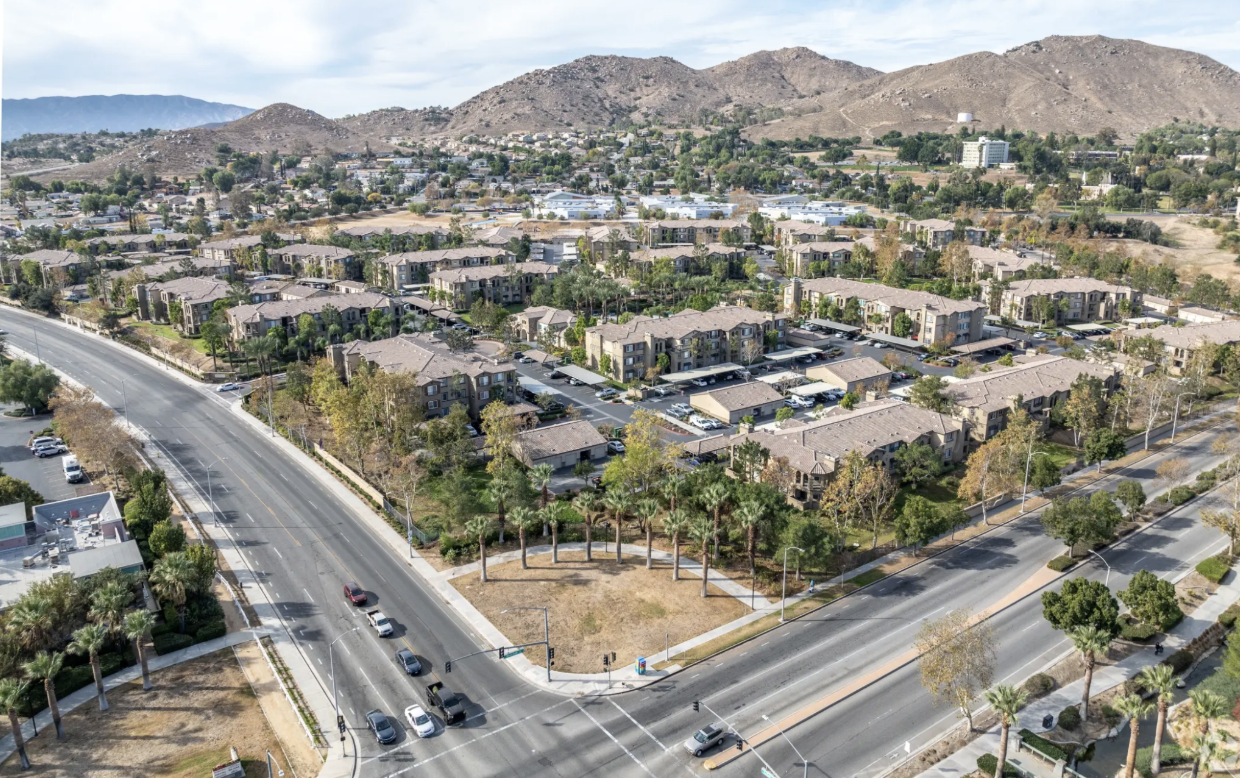
Fundamentals Stabilize as New Supply Slows
After nearly three years of heavy apartment construction, the Inland Empire's multifamily market is finally finding its footing. Occupancy has leveled off, rents are ticking back up, and a sharply reduced construction pipeline for 2026 means owners should see less competition from new supply going forward. Here's what's actually happening on the ground for Riverside and San Bernardino County apartment owners.
For much of 2023 through 2025, Inland Empire apartment owners were absorbing the effects of one of the largest multifamily construction waves in the region's history — thousands of new units delivered in a compressed window, pushing occupancy down and putting pressure on rents, particularly for Class A properties competing directly with brand-new communities.
That cycle is turning. Early in 2026, occupancy across the region settled in the mid-95% range, and while it dipped slightly quarter over quarter, the pace of decline has slowed dramatically compared to the prior two years. More encouraging for owners: net absorption turned positive again in the first quarter, reversing a negative stretch at the end of 2025, a sign that renter demand is still very much intact even as the market worked through oversupply.
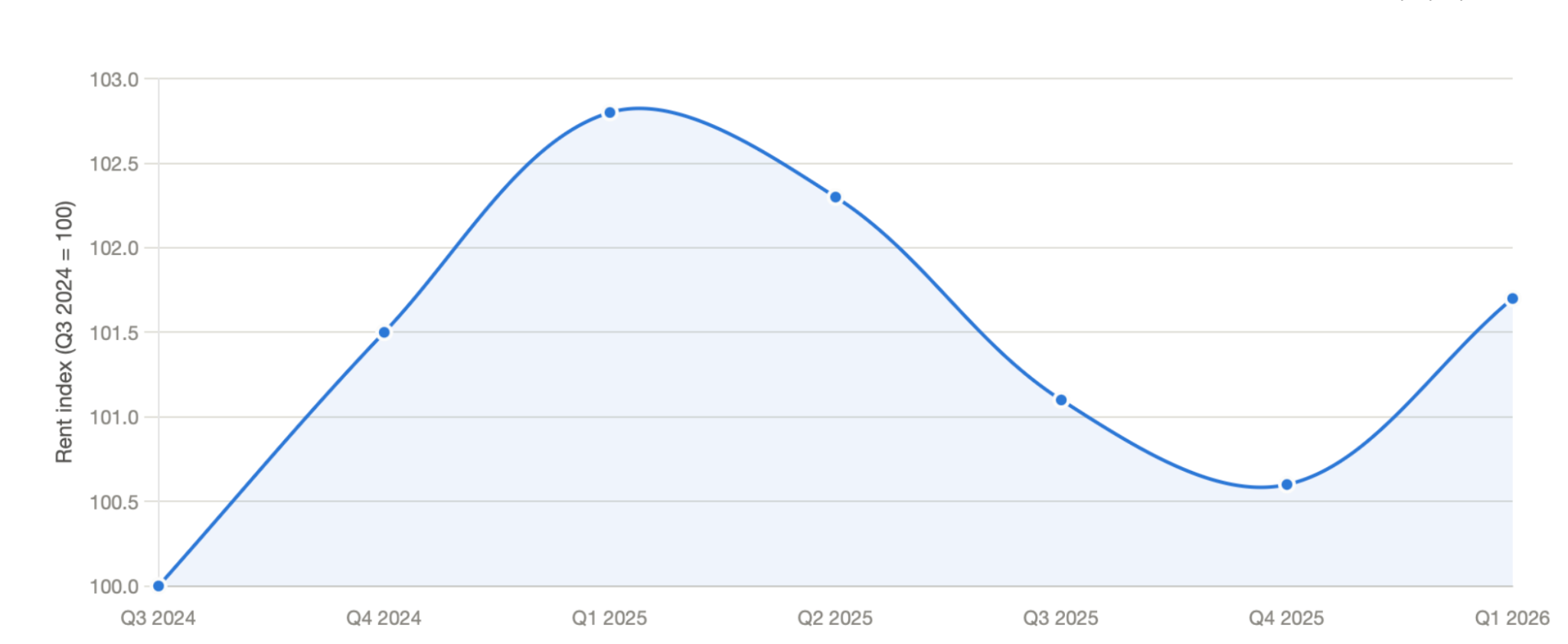
Rents are responding. After two consecutive quarterly declines, asking rents across the Inland Empire increased in the first quarter of 2026 — a meaningful signal that the imbalance between new supply and renter demand is starting to correct itself. Class B and Class C properties, which make up the bulk of the region's rental housing stock, have held up especially well throughout the cycle, with vacancy in those segments running well below the Class A average.
The biggest tailwind for owners heading into the back half of 2026 is the construction pipeline itself. After delivering thousands of units annually over the past several years, new completions are expected to slow to roughly 2,500 units for the year — a fraction of the recent pace. Fewer new communities competing for renters means existing owners get a longer runway to push rents and stabilize occupancy without fighting concessions-heavy lease-up properties down the street.
What this means for owners:
- If you've been holding through the supply wave, the pressure is easing. Occupancy and rent trends both point toward a more balanced market through the remainder of 2026.
- Class B and C assets — the "workforce housing" tier — remain the most resilient part of the market and continue to attract strong investor interest.
- With deliveries slowing sharply, now is a reasonable window to evaluate whether your property is positioned to capture the coming rent growth, or whether current pricing in the investment sales market makes this a good time to explore an exit.
The Inland Empire's long-term drivers — population growth, relative affordability compared to Los Angeles and Orange County, and a diversified job base — haven't gone anywhere. What's changed is that the supply-side headwind that's dominated the last three years is finally fading, giving owners a clearer picture of where the market is headed next.
Have questions about how these trends affect your specific property or portfolio? Let's talk strategy.
What Inland Empire Multifamily Owners Should Know About Today's Investment Sales Marke
Transaction activity in the Inland Empire apartment market opened 2026 at its strongest first-quarter pace since 2023, with Class B properties in San Bernardino County drawing the most buyer interest. Cap rates remain bifurcated by asset class, and pricing trends tell a more nuanced story than the headlines suggest. Here's what owners considering a sale need to understand right now.
If you've been sitting on the sidelines wondering whether it's a good time to sell your Inland Empire multifamily property, the transaction data from early 2026 offers a useful signal: buyers are back, and they're active.
The Inland Empire investment sales market opened 2026 with its strongest first-quarter transaction pace since 2023 — a clear sign that investor confidence is returning as the supply cycle that weighed on the market for the past few years starts to turn. Activity has been concentrated in Class B apartment communities in San Bernardino County, where value-add fundamentals and relative affordability continue to draw buyer interest from investors looking for yield they simply can't find in coastal Southern California markets.
Cap rates tell a two-tier story.
Stabilized Class A properties — newer, amenity-rich communities — are trading in the high-4% to low-5% cap rate range. Class B and C value-add assets, the bread-and-butter workforce housing that makes up most of the region's rental stock, are transacting closer to 6.0%. That spread reflects real differences in buyer expectations: Class A buyers are underwriting stability and low management intensity, while Class B/C buyers are underwriting a business plan — rent growth through renovation, operational improvement, or simply riding the market's recovery.
It's also worth understanding what's happening with pricing on a per-unit basis. Overall median pricing across the market has softened somewhat, but that's largely a function of deal composition — more Class B transactions relative to Class A — rather than a broad decline in property values. Within the Class B segment specifically, pricing has actually held in line with 2025 levels and moved meaningfully higher compared to 2024. In other words: don't read a market-wide median as a signal about what your specific property is worth. Asset class and submarket matter enormously right now.
Transaction volume overall is still running well below the 2022 peak — roughly half — but that peak was an artifact of historically low interest rates, not a baseline to measure against. What matters more for owners today is the direction of travel: financing conditions are gradually easing, buyers are underwriting a market that's past its supply-driven trough, and pricing on stabilized and value-add assets alike has remained firm.
What this means if you're weighing a sale:
- Buyer demand for Class B and C multifamily in the Inland Empire is real and active right now — this isn't a market where you'll struggle to generate interest.
- Your property's asset class matters more than the market-wide median price when it comes to setting pricing expectations.
- With borrowing costs trending in a more favorable direction and the supply overhang easing, timing considerations are shifting in owners' favor compared to the last two years.
Every property and ownership situation is different, and the right move — hold, refinance, sell, or reposition — depends on your specific goals, basis, and timeline. If you're trying to figure out where your property fits into this market, that's exactly the conversation worth having.
Curious what your property could command in today's market? Let's run the numbers together.
Why the Inland Empire's Long-Term Multifamily Outlook Still Looks Strong
Beyond the quarter-to-quarter noise of occupancy and rent data, the Inland Empire's fundamental case for multifamily investment rests on population growth, job diversification, and major infrastructure projects that are just now coming online. For owners thinking beyond the next lease cycle, here's why the region's long-term trajectory remains one of the strongest in Southern California.
It's easy to get caught up in quarterly occupancy swings and cap rate movements, but the more important question for multifamily owners is a longer one: does the Inland Empire still make sense as a place to own rental housing over the next five to ten years? The underlying data says yes, and the reasons go well beyond "it's cheaper than LA."
Affordability is still doing a lot of work.
Riverside County home prices run roughly $200,000 to $300,000 below Orange County and $350,000 to $450,000 below coastal Los Angeles, and the gap in rents follows a similar pattern. That affordability gap is precisely what keeps renter demand flowing into the Inland Empire from coastal markets — households priced out of LA and Orange County don't stop needing housing, they relocate to where they can afford it. That in-migration has continued to support absorption even through the recent supply wave.
The job base is diversifying in ways that matter.
The narrative that the Inland Empire is a one-industry logistics economy is increasingly outdated. Over the past year, the region added roughly 14,600 net jobs, and the leading sectors weren't warehousing — they were education and health services, followed by government and leisure and hospitality. Meanwhile, construction and manufacturing employment actually contracted. A rental market anchored increasingly by healthcare, education, and public-sector employment tends to be more stable through economic cycles than one dependent on a single industry's boom-bust patterns.
Infrastructure investment is compounding the region's advantages.
Several major projects are advancing that will reshape how residents move through, and into, the Inland Empire. The West Valley Connector bus rapid transit line is targeting a 2026 opening, San Bernardino County's hydrogen-powered rail service is now running on the Arrow corridor, and Brightline West — the high-speed rail line connecting the region toward Las Vegas — continues fieldwork at its Rancho Cucamonga station, with service targeted for 2028 or 2029. Each of these projects makes IE submarkets more accessible and more attractive to both renters and long-term capital, and transit-adjacent multifamily typically benefits first.
Investors are already positioning for this.
The Inland Empire continues to attract long-term capital specifically because of this combination — strong household formation, demographic resilience, and relative affordability that isn't going away. That's a different kind of investor thesis than chasing a supply-demand imbalance in any given quarter; it's a bet on the region's structural position within Southern California.
What this means for owners with a longer horizon:
- The demand drivers behind Inland Empire multifamily aren't cyclical — they're structural, rooted in the region's role as Southern California's affordable housing valve.
- Job growth is broadening beyond logistics, which should make rental demand more resilient in the next downturn than it was in past cycles.
- Transit and infrastructure investment happening now will likely show up in property values and rent growth over the next several years, particularly near the West Valley Connector corridor and the Brightline West station area.
None of this means every submarket or every property is a buy-and-hold forever. But for owners weighing whether to stay invested in the Inland Empire versus redeploying capital elsewhere, the long-term fundamentals remain some of the most compelling in Southern California.
Thinking about how these long-term trends should shape your hold or sell strategy?
Let's talk through your specific portfolio.
or another way